
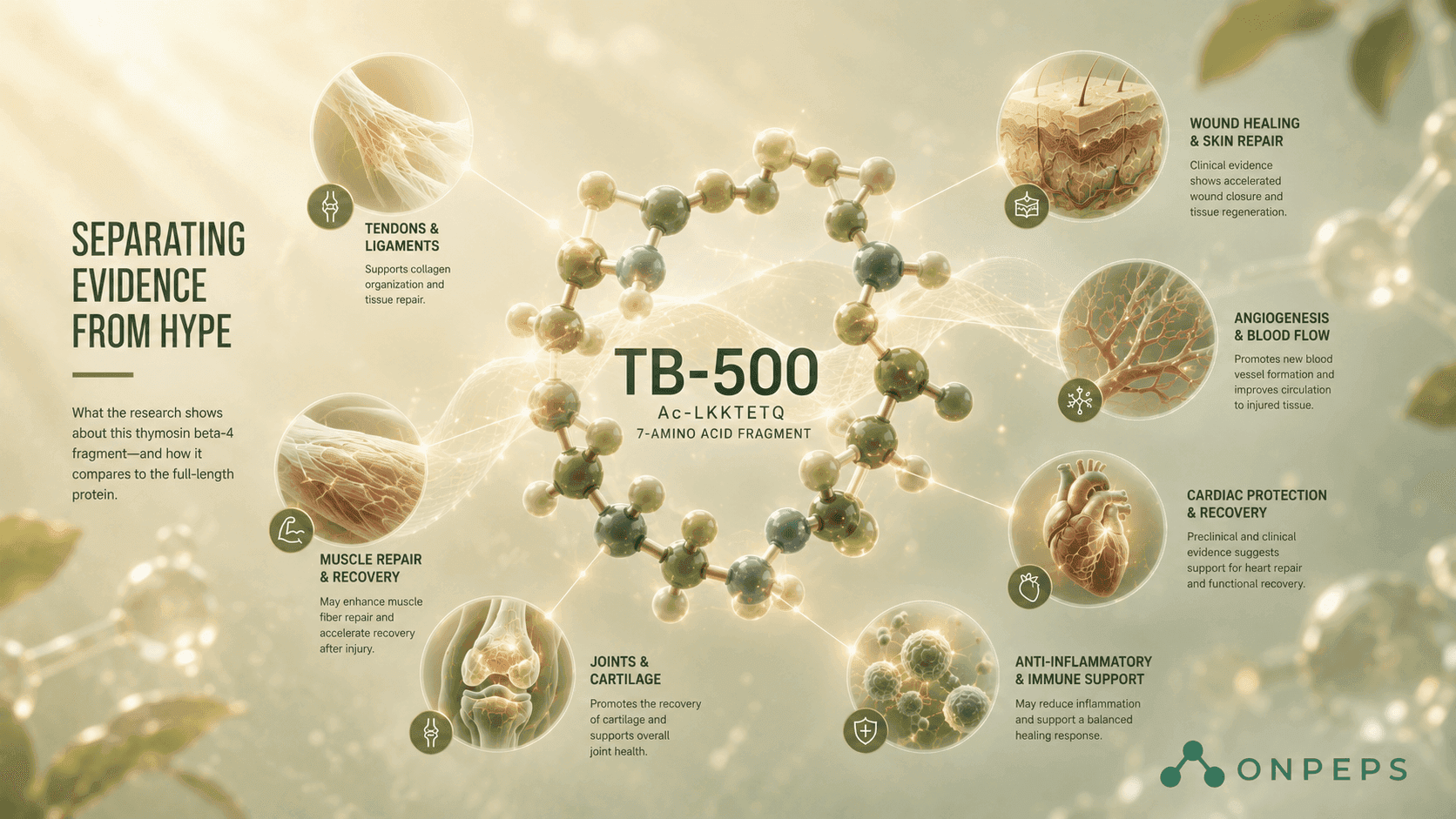
TB-500 is a lab-made peptide copied from a tiny, seven-amino-acid section of thymosin beta-4 (Tβ4). In the human body, Tβ4 is a natural protein that controls cell movement and speeds up tissue healing. Since the mid-2000s, there has been a growing use of this peptide among general users, especially the biohacking and bodybuilding communities. Even researchers have become interested in studying its effects on tendon injuries, muscle repair, and cardiac recovery, to name a few.
But there is a difference between what the larger peptide community is saying and what the research has to say. Let's dive in.
TLDR
What is TB-500? A synthetic peptide fragment derived from thymosin beta-4 that helps regulate cell migration, a key process in tissue repair.
Benefits: Commonly used for tendon, muscle, and joint recovery. Animal studies are promising, but the strongest human evidence is for corneal wound healing.
Dosage: A commonly reported protocol uses 2 to 2.5 mg twice weekly for 4 to 6 weeks, followed by 2 mg once weekly. No evidence-based human dosing guideline exists.
Safety: Human studies suggest thymosin beta-4 is generally well tolerated. Use is generally discouraged in people with active or suspected cancer because of its pro-angiogenic effects.
Legal Status (June 2026): Not FDA approved and prohibited by WADA for competitive athletes.
Are TB-500 and Thymosin Beta-4 The Same Thing?
Let’s get this straight. No, they are not the same thing. Thymosin beta-4 (Tβ4) is a 43-amino acid protein found in nearly every cell in the human body. From platelets to white blood cells, to wound and plasma fluid, they all contain this compound in high concentrations. Tβ4 is central to actin regulation, wound healing, and cell movement.
But what makes it special in the peptide community is that it is the molecule with the longest clinical research history and that includes human trials.
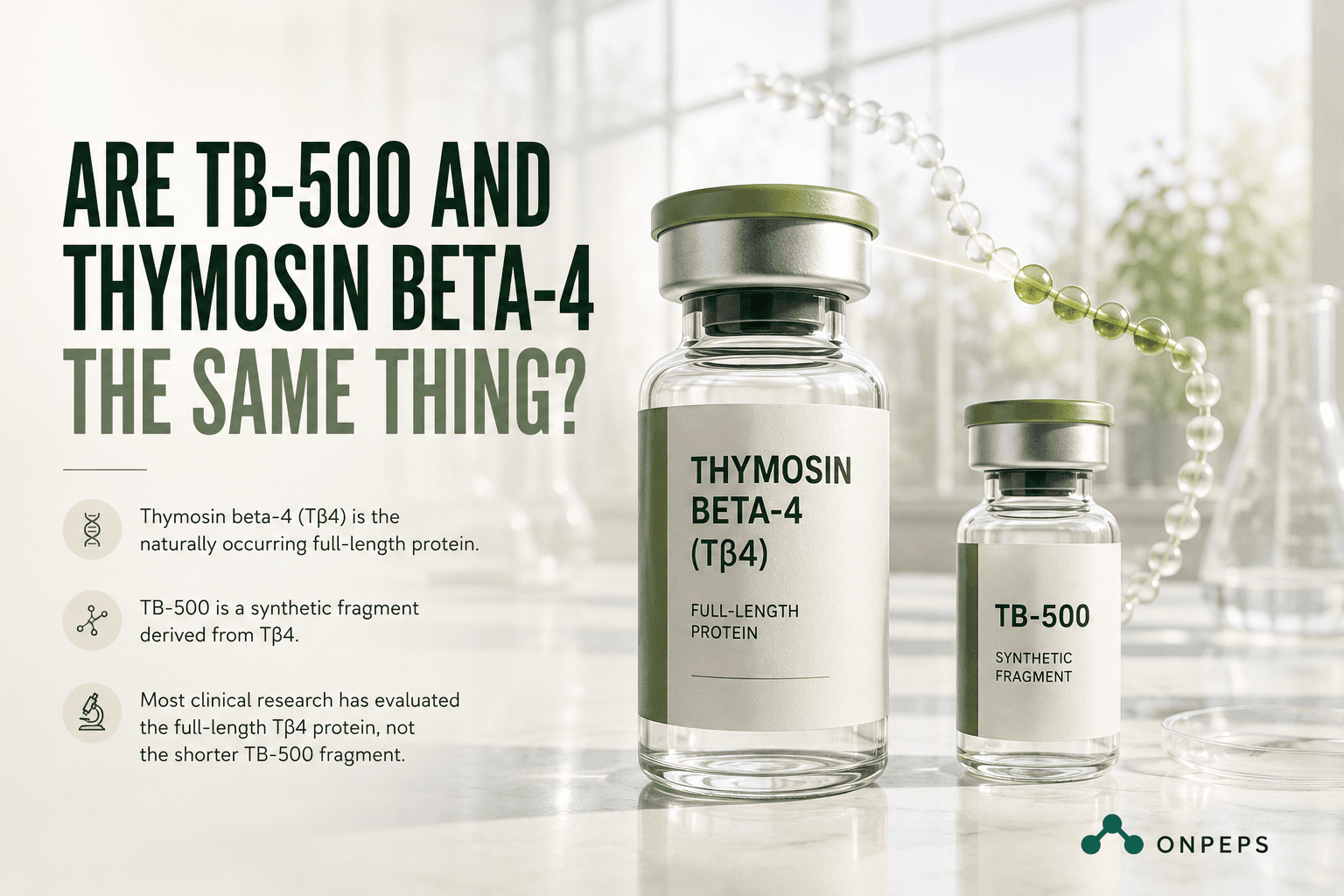
TB-500 is a short, lab-made version of the full thymosin beta-4 (Tβ4) protein. It is a seven-amino-acid fragment (Ac-LKKTETQ) copied from positions 17 to 23 of Tβ4, the region involved in actin binding. Actin is a protein that helps cells move, change shape, and repair damaged tissue.
It was designed to be smaller, more stable, and easier to manufacture. But we need to remember one very important caveat in this.
Almost all major scientific research, including the heart, wound healing, and Phase 3 eye studies, tested the full-length Tβ4 protein, not the shorter TB-500 fragment. The human evidence for the parent protein is substantially larger than the evidence for TB-500 itself.
A 2024 study by Rahaman et al. (PMID 38382158) uncovered another important finding. The researchers showed that TB-500 is rapidly broken down into a smaller metabolite called Ac-LKKTE. These were able to retain their wound-healing activity in the experimental models.
If future research confirms these findings, some of TB-500's biological effects may be mediated by this metabolite rather than the injected peptide itself.
(For a full breakdown of the structural differences, pharmacokinetics, and what the Rahaman 2024 finding means in practice, see our TB-500 vs Thymosin Beta-4 article.)
How does TB-500 work?
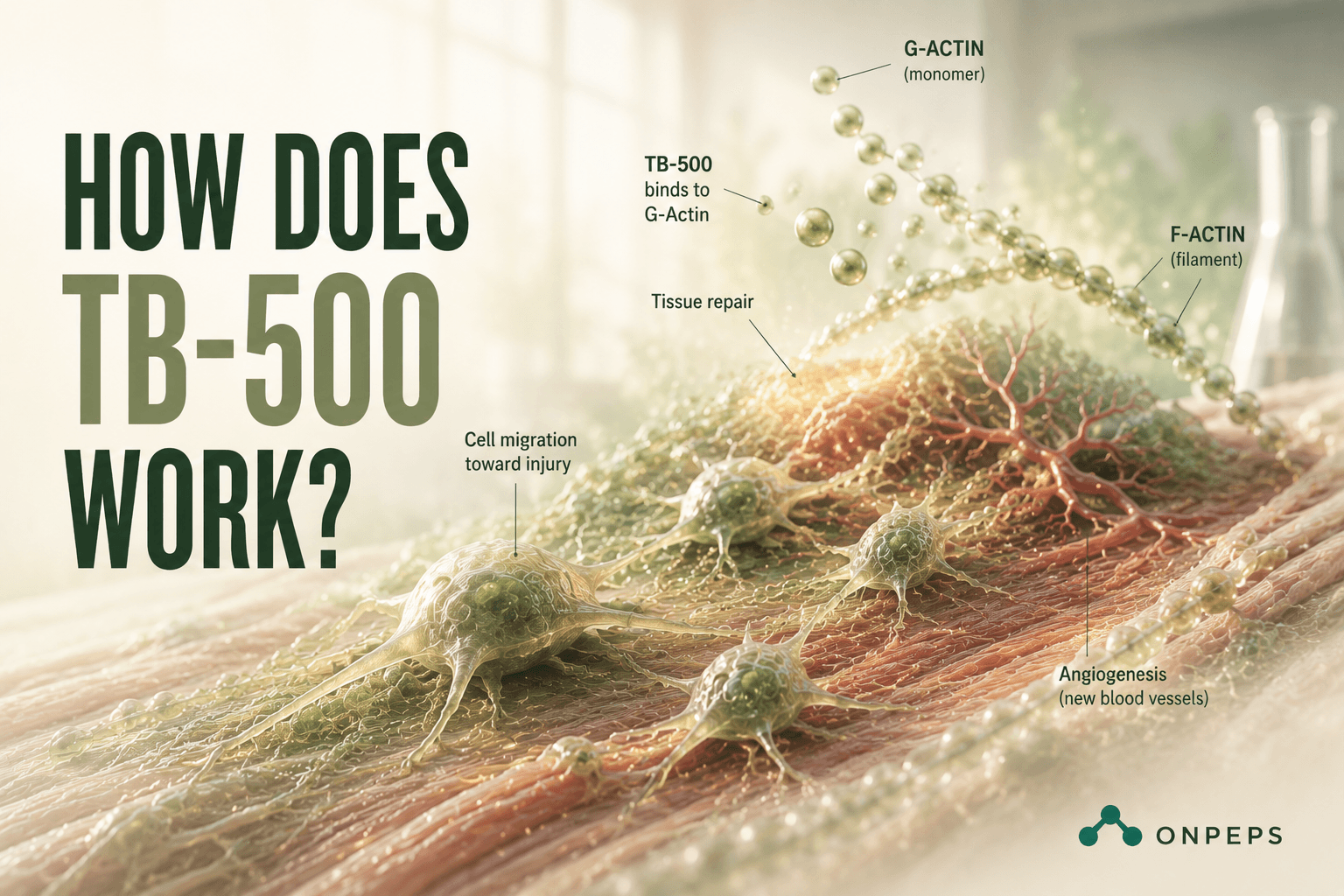
TB-500 works by binding to actin, a protein that helps cells move and repair damaged tissue. By regulating how actin is used inside cells, TB-500 may help repair cells reach injured areas more efficiently. This supports processes such as tissue repair, new blood vessel formation (angiogenesis), collagen production, and remodeling in preclinical studies.
If we were to understand the deeper science behind this, then first we need to understand actin. Inside cells, actin exists in two forms: G-actin (globular, monomeric, available for assembly) and F-actin (filamentous, polymerized, structural). Let's say a tissue gets injured. The cells near the wound need to move towards the damage and rebuild the structure. This movement depends on the actin.
TB-500 has a strong affinity for G-actin, the protein cells use to build their internal structure and move around. By binding to G-actin, TB-500 helps keep a pool of it available when cells need it most. This allows repair cells to move more efficiently toward damaged tissue. Once the cells arrive at the injury site, they help trigger tissue repair.
TB-500 has been found to be systemically distributed through the bloodstream rather than staying where it is injected. So the effects may occur at multiple injury sites throughout the body at the same time. This is the main functional difference between TB-500 and peptides like BPC-157, which are commonly used closer to the target tissue.
TB-500 also reduces inflammation through cytokine modulation, though those specific pathways are better characterized for full-length Tβ4 than for the fragment.
(See our full TB-500 vs BPC-157 comparison for a deeper breakdown.)
TB-500 also reduces inflammation through cytokine modulation, though those specific pathways are better characterized for full-length Tβ4 than for the fragment.
TB-500 Benefits: What the Human Evidence Actually Shows
Here is the true picture. There is ample human clinical evidence for full-length thymosin beta-4 (Tβ4) in a few specific areas, and there is data from TB-500 animal studies. But when it comes to human evidence, especially for areas like tendon, muscle, and joint repair, the data is mostly anecdotal.
Application | Evidence Level | Key Data |
Corneal wound healing | Phase 3 RCT (human) | SEER-1 (RGN-259, neurotrophic keratopathy): 60% complete healing at 4 weeks vs. 12.5% placebo* |
Pressure/stasis ulcers | Phase 2 pilot (human) | NCT00832091: safety confirmed, positive healing trends |
Cardiac repair post-MI | Phase 2 pilot (human) | Zhu et al. 2016, Cytotherapy: Tβ4-pretreated autologous EPC transplantation was feasible and safe at 6-month follow-up |
Dermal wound healing | Phase 2 (human) + extensive animal | Kleinman & Sosne 2016 review |
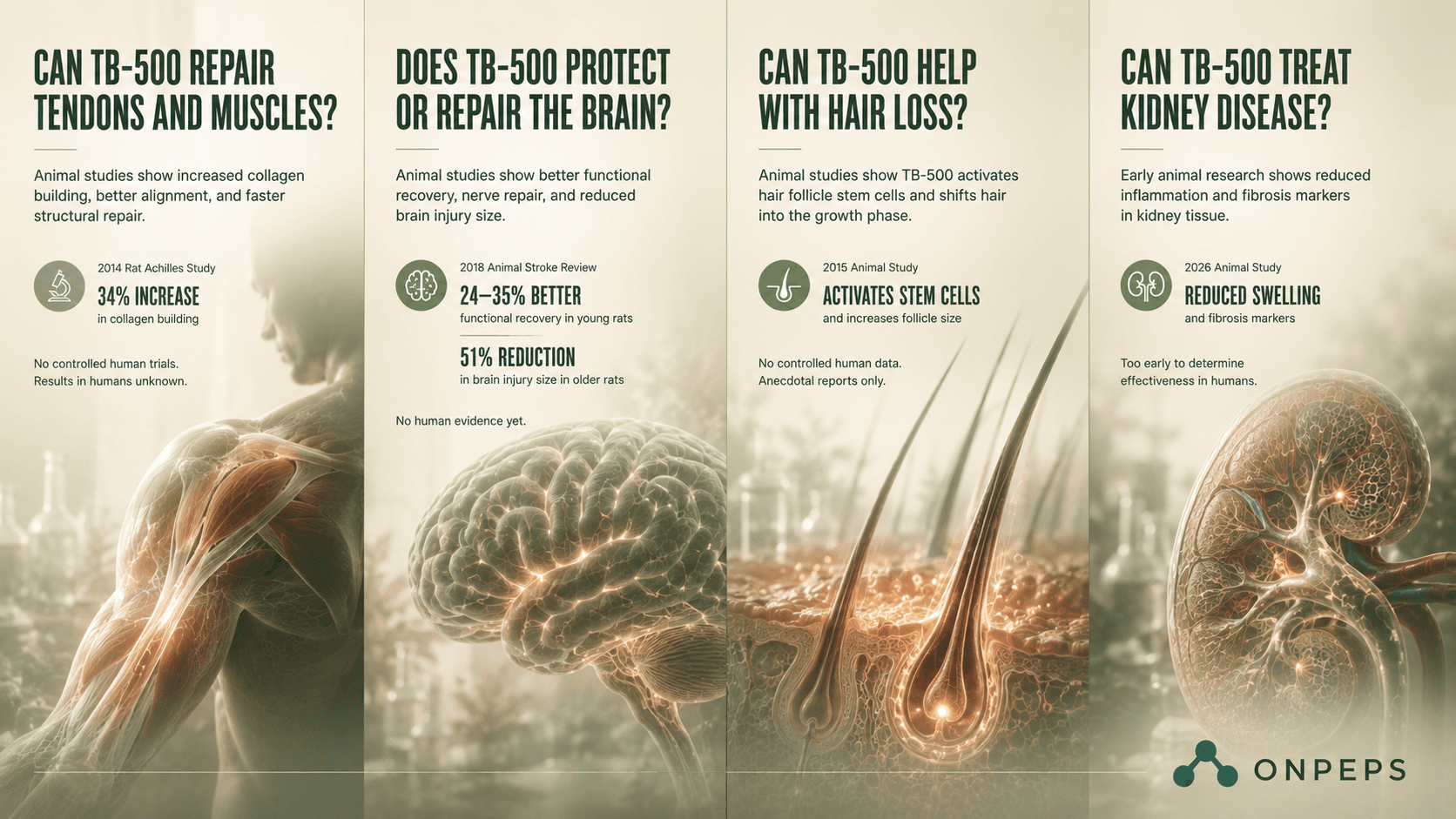
Tendon/ligament healing | Animal models only | 2014 rodent Achilles study: 34% increased collagen deposition, improved tensile strength |
Hair growth | Animal models | Gao et al. 2015, PLoS ONE: stem cell activation, telogen → anagen transition |
Neuroprotection | Animal models | Morris et al. 2018 (PMID 30063858): reviewed animal stroke studies showing improved neurological recovery, increased myelin production, nerve repair, and reduced brain injury. |
Kidney disease | Preclinical only | Di et al. 2026, Peptides: emerging therapeutic candidate |
Musculoskeletal (athletes) | Anecdotal + animal | No human RCT exists |
{* SEER-1 narrowly missed conventional statistical significance for its primary endpoint (p = 0.0656) despite the observed healing difference. Subsequent Phase 3 development produced mixed results.}
What Does the Research Say About TB-500 for Wound & Tissue Healing?
The strongest human evidence for these peptides is in wound healing.
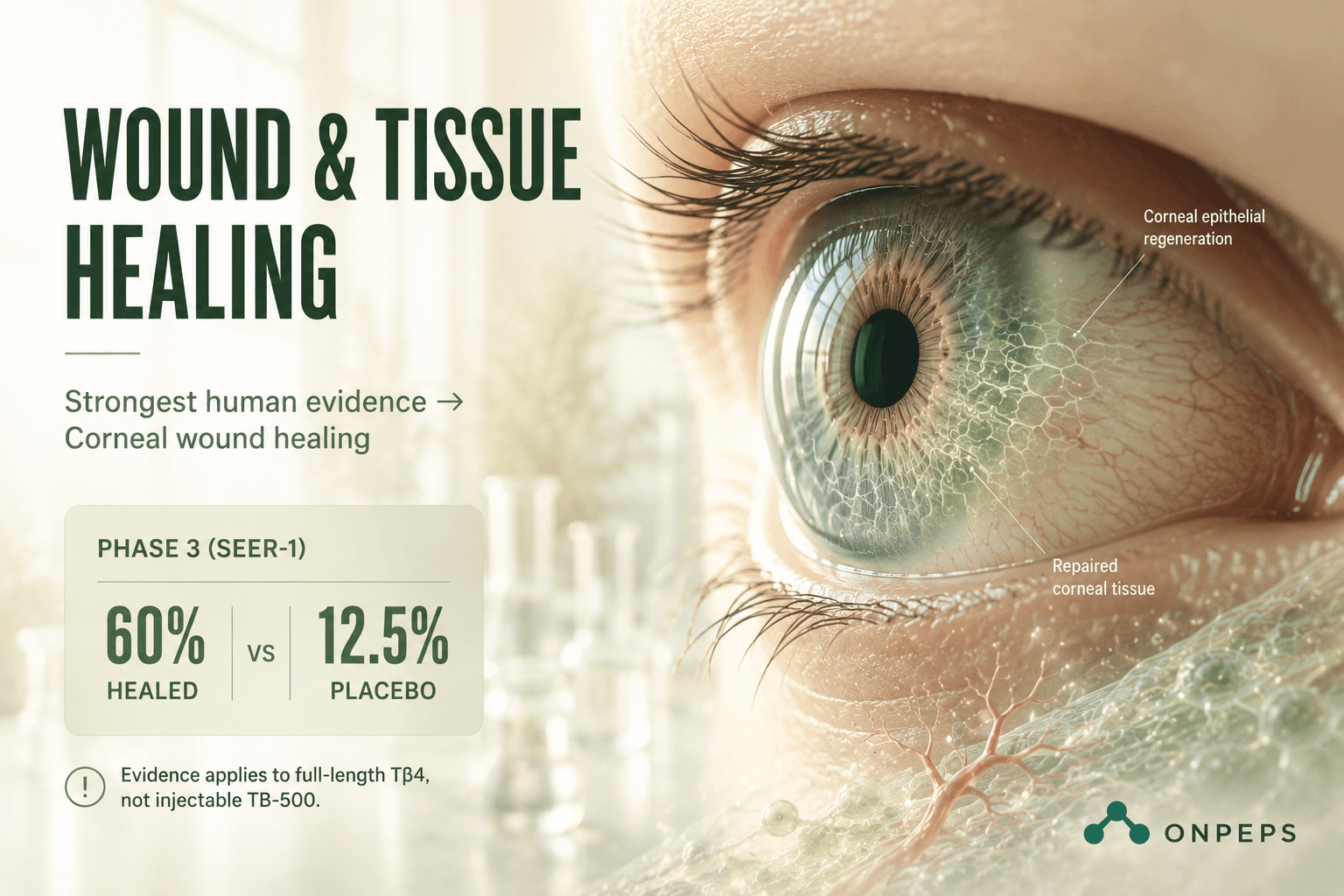
In a Phase 3 clinical trial called SEER-1, researchers tested a 0.1% eye drop version of full-length Tβ4. This was done on patients with a severe eye condition called neurotrophic keratopathy. It is a rare eye disease where the cornea loses its nerve supply, making it difficult for the eye to heal after injury.
After four weeks, 60% of the treated patients (6 out of 10) achieved complete healing, compared to just 12.5% (1 out of 8) in the placebo group. The study came very close to meeting the usual standard researchers use for statistical significance (p = 0.0656), but investigators still described the results as a strong positive trend.
However, science is rarely straightforward. Another follow-up trial called SEER-3 did not show a clear difference in eye healing compared to the placebo. On the other hand, separate Phase 2 trials for leg wounds caused by poor circulation (venous stasis ulcers) confirmed that the protein is safe and shows good healing potential.
Are you starting to see the main issue? More research is needed before we can draw conclusions.
The main thing to remember here is that all of these human studies used full-length Tβ4 delivered directly as eye drops or skin treatments. They do not use injectable TB-500 for muscle or joint injuries. These trials are proof enough that these peptides are active in the human body. But be cautious about assuming that injectable TB-500 will have the same results for sports medication.
Does TB-500 Repair Heart Damage?
A study by Bock-Marquette et al. described thymosin beta-4 as the first known peptide to trigger both heart muscle and blood vessel regrowth at the same time. Another pilot study by Zhu et al. in 2016, put this to the test on patients recovering from severe heart attacks. It was particularly interesting because they treated the patients’ own cells that form blood vessels. Then they transplanted those back into the patient after a severe heart attack (an ST-elevation myocardial infarction, or STEMI).
The results were positive. At six months, not only was the procedure proven safe, but the patients were showing clear signs of improved heart function. And their ability to exercise was also increased.
More recently, Maar et al. in a 2025 study mapped out a particular cellular pathway called the ROCK1 pathway, which is central to how this peptide prevents cardiac fibrosis or scarring of the heart. They found that thymosin beta-4 increases a genetic regulator called miR-139-5p. This then shuts down a protein called ROCK1.
As ROCK1 gets suppressed, it stops "fibroblast-to-myofibroblast transformation". In plain terms, it is the process in which healthy tissue cells turn into rigid, scar-producing cells, which in turn causes heart stiffness or cardiac fibrosis.
This adds another layer of evidence to the 2004 Study by Bock-Marquette et al. that thymosin beta-4 is capable of waking up dormant cells on the heart’s outer layer, which leads to tissue regeneration.
Together, these studies provide the most detailed biological blueprint for heart repair in current scientific literature.
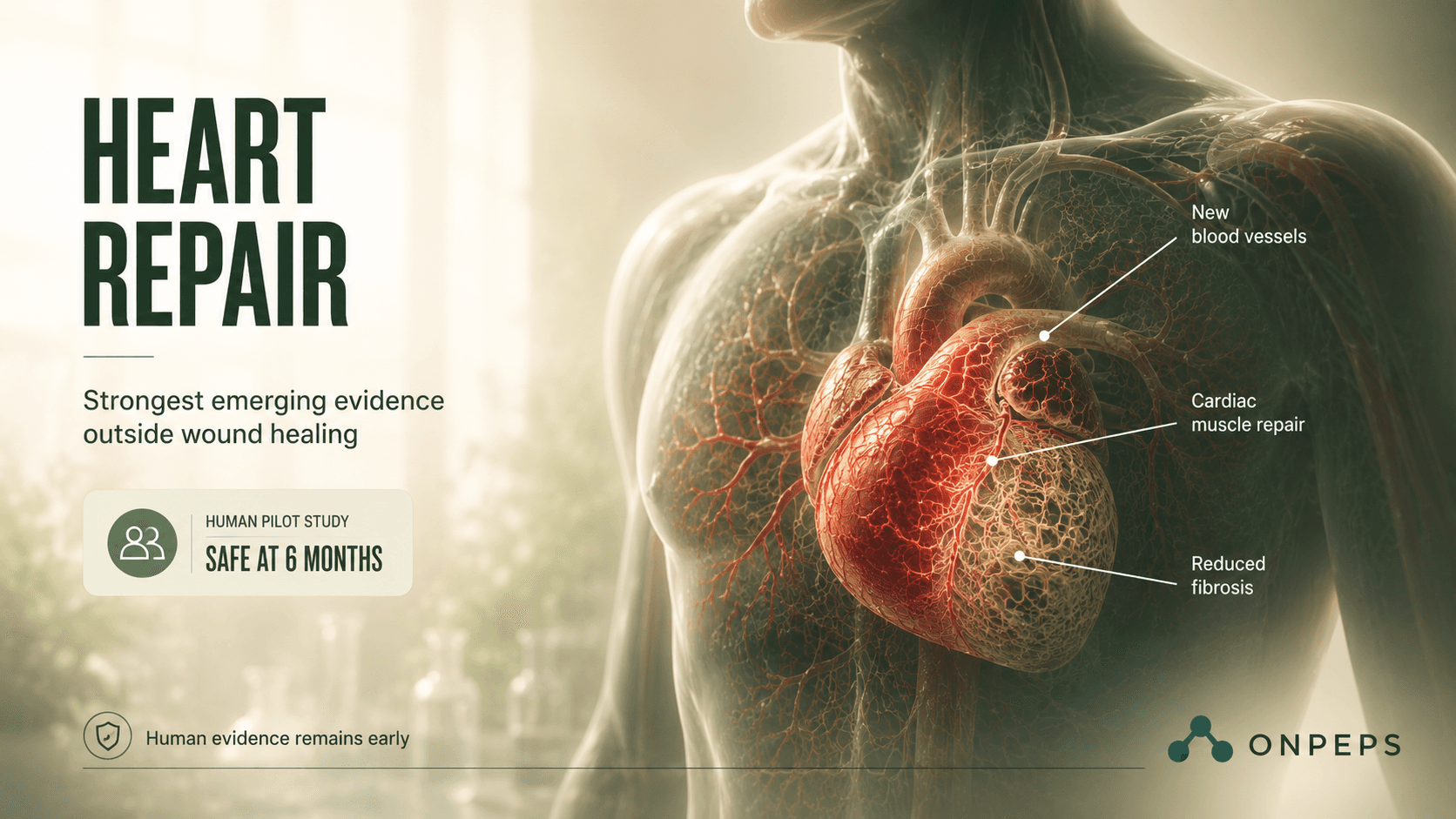
If we can infer one thing from this is that TB-500's ability to circulate throughout the body is one of the biggest indicators of its effectiveness in repairing the heart. Yes, human trials are still small and in early stages, but the science is clear that TB-500 is far more effective in heart repair than joint or muscle injuries.
Can TB-500 Repair Tendons and Muscles?
The animal data is real. A 2014 study on rat Achilles tendons showed a 34% increase in collagen building and improved stretching strength after treatment with the peptide. Across multiple animal models, researchers consistently documented higher levels of VEGF (a protein that triggers new blood vessel growth) inside oxygen-deprived tendon tissue. The studies also showed that the new collagen lined up better and the tendon structure rebuilt itself faster.
But remember, there have been no controlled human trials for tendon or muscle repair when it comes to TB-500. Athletes and biohackers who use TB-500 for tendon injuries are doing so based on theory and animal data. Look, until those human trials happen, no one can tell you to what extent this peptide helps in human tendons and muscles.
Does TB-500 Protect or Repair the Brain?
Again, we need to highlight the fact that the evidence comes from animal studies. Morris et al. (2018, PMID 30063858) reviewed animal stroke studies and found that thymosin beta-4 aided recovery after brain injuries.
In younger rats, the treated animals scored 24% to 35% better on tests measuring movement, coordination, and brain function. Researchers also saw a boost in nerve repair and the production of myelin (the protective coating around nerves). In older rats, the peptide reduced the actual size of the brain injury by about 51% (shrinking the damaged area from 26.04% down to 12.77%).
But there is no evidence as to whether the same would work in humans.
Can TB-500 Help with Hair Loss?
A 2015 study by Gao et al. found that thymosin beta-4 wakes up stem cells inside hair follicles. In animal models, the peptide was successful in pushing hair out of its telogen or resting phase to anagen or growth phase. There was also a noticeable increase in the physical size of the follicles.
As usual, online communities and many brands have been quick to turn their attention to TB-500 for hair loss and even reversing grey hair. Some users have even reported seeing positive results. But controlled human data does not exist.
(We cover this fully in our TB-500 and Hair Growth article.)
Can TB-500 Treat Kidney Disease?
There is no actionable evidence on that yet. A 2026 study by Di. et al. has identified that thymosin beta-4 was able to lower swelling and block specific cells that create rigid scar tissue (anti-myofibroblast mechanisms). This shows promise that it might be useful in the treatment of renal fibrosis, but again, it's still too early to determine anything.
TB-500: What Peptide Users and the Research Community Use
Parameter | Commonly Reported Protocol |
|---|---|
Evidence | No FDA-approved dosing protocol. Current protocols are based on animal research and practitioner experience. |
Loading phase | 2 to 2.5 mg, twice weekly for 4 to 6 weeks. More aggressive protocols may use 4 to 5 mg twice weekly (8 to 10 mg/week). |
Maintenance phase | 2 mg once weekly. Some reduce to 2 mg every two weeks. |
Cycle length | 8 to 12 weeks, followed by a 4-week break. |
Injection method | Subcutaneous injection. |
Injection site | TB-500 acts systemically, so injecting near the injury has no demonstrated advantage. |
Dose adjustments | Usually based on injury severity and whether the injury is acute or chronic, rather than body weight. |
Human safety data | Phase 1 and 2 studies of full-length thymosin beta-4 reported no dose-limiting toxicities, with mostly mild, temporary adverse events. |
(Complete reconstitution instructions, dosing math for 5mg and 10mg vials, and injection technique will be in our TB-500 Dosage and Protocol Guide.)
TB-500 Side Effects & Safety
What side effects should users expect?
Most users report only mild side effects, such as redness at the injection site, temporary fatigue, or a mild headache.
Is TB-500 considered safe?
Based on the available human studies on thymosin beta-4 and animal research, short-term use appears to have a favorable safety profile. No organ damage or immune suppression has been reported at standard research doses.
Can TB-500 cause cancer?
There is no evidence that TB-500 causes cancer in humans. However, because it can promote the growth of new blood vessels, most researchers advise against using it if you have active or suspected cancer.
Is long-term use safe?
Nobody knows yet. There are no long-term studies beyond about six months.
What is the biggest safety risk?
Product quality. Research peptides are not regulated like prescription medicines, so some products may contain the wrong dose or contaminants.
TB-500 Legal Status in 2026
Is TB-500 legal in the US?
TB-500 is not a controlled substance in the US, but it is also not FDA-approved for human use. On April 23, 2026, the FDA removed it from its Category 2 list after the original nominations were withdrawn.
What is happening with the FDA in 2026?
The FDA's Pharmacy Compounding Advisory Committee (PCAC) is scheduled to review TB-500 in July 2026 for possible placement on the 503A Bulks List (Category 1). If approved, licensed compounding pharmacies could prepare it by prescription.
What does this mean right now?
As of June 2026, TB-500 is in a transitional period. Some compounding pharmacies have already started offering it again ahead of the PCAC decision. A positive recommendation could restore broader compounding access, while a negative recommendation could effectively reinstate restrictions.
Can athletes use TB-500?
No. TB-500 is prohibited under the 2026 WADA Prohibited List. A positive test can result in a ban of at least two years, and up to four years if intentional use is established. Current testing methods can detect TB-500 for roughly 30 to 45 days in blood and urine. Military sports programs that follow WADA rules apply the same ban.
What does "Research Use Only" actually mean?
Products sold as "Research Use Only" exist in a legal gray area. The label does not mean the FDA has approved them for human use, and it does not make self-administration legal.
How to Buy TB-500 in 2026
There are two legitimate ways:
Compounding pharmacy (prescription required): This is the cleanest option for quality and legal standpoints. Yes, you will need a physician willing to prescribe you peptides like TB-500. The good news is that this is increasingly accessible through telehealth platforms selling regenerative medicines. Products come with pharmaceutical-grade quality controls, tested purity, and sterility verification.
Research chemical vendors: It is legal to purchase research peptides, but it is not legal to market these for human consumption. Naturally, there is a lack of quality control. Independent third-party Certificates of Analysis (COAs) should be considered the minimum requirement.
COA verification from an independent third-party laboratory is the minimum due diligence. Price is not a reliable indicator of quality, although legitimate, quality-controlled peptide products generally have a practical cost floor of around $30 to $50 per 5 mg vial.
Now there is a third way. But proceed with utmost caution. We only mention this because our research shows that a majority of peptide users are resorting to this.
The gray market: Most TB-500 sold today comes through the gray market rather than licensed pharmacies. This is also where the biggest risks exist. Product quality varies widely, labels may not match what's in the vial, and contamination or incorrect dosing remain ongoing concerns. Again, independent third-party COA testing is the minimum standard before considering any product.
(Our TB-500 Buying Guide covers COA verification, acceptable purity thresholds, and red flags to avoid.)
TB-500 Quick Reference
Attribute | Detail |
Chemical name | Ac-LKKTETQ (thymosin beta-4 fragment, positions 17–23) |
Molecular weight | 889.0 Da (PubChem)* |
Mechanism | G-actin sequestration → cell migration → tissue repair + angiogenesis |
Common loading dose | 2–2.5 mg subcutaneous, twice weekly |
Common maintenance dose | 2 mg once weekly |
Cycle length | 8–12 weeks |
Injection route | Subcutaneous; injection site does not need to be near the injury |
FDA status (June 2026) | Not approved; removed from Category 2 April 2026; PCAC review July 2026 |
WADA status | Prohibited under S2 (2026 list); ~30–45 day detection window |
Contraindications | Active/suspected cancer, pregnancy, breastfeeding |
Phase 1 safety ceiling | No dose-limiting toxicity in Tβ4 human trials; AEs mild and transient |
(*Note: Molecular weight: approximately 889 Da. Published database records vary depending on the specific TB-500 form referenced.)
FAQ
What is TB-500 peptide used for?
TB-500 is commonly used for tendon, muscle, and ligament injuries, post-surgical recovery, and by some practitioners for heart and brain repair. Hair growth is another popular community use backed by animal research. The strongest human evidence is for wound healing and heart-related applications. For tendon, muscle, and joint repair, the evidence comes mainly from animal studies and practitioner experience rather than human clinical trials.
Is TB-500 the same as thymosin beta-4?
No. TB-500 is a seven-amino acid synthetic fragment (Ac-LKKTETQ, positions 17–23) of full-length thymosin beta-4, which is 43 amino acids. Most clinical evidence in the published literature used full-length Tβ4, not the TB-500 fragment.
How long does it take for TB-500 to work?
Anti-inflammatory effects are often reported within the first week. Acute injuries may start improving by weeks 3 to 4 in many protocols. Tendon and ligament injuries usually take longer, with many users reporting noticeable improvements between weeks 6 and 8. Chronic injuries may require 10 to 12 weeks. In the SEER-1 trial, 60% of patients achieved complete corneal healing within four weeks for that specific eye condition.
Is TB-500 safe?
Short-term, the safety profile is favorable. Phase 1 and Phase 2 testing of full-length Tβ4 found no dose-limiting toxicities, with adverse events mild and transient. Common effects are injection site reactions and brief fatigue. The main documented concern is the contraindication in anyone with active or suspected cancer. No human long-term safety data beyond 180 days exists. Product quality from unregulated vendors is a separate, underappreciated risk.
What is the difference between BPC-157 and TB-500?
BPC-157 comes from a protective stomach protein and mainly supports healing close to where it is injected. TB-500 is a fragment of thymosin beta-4 and works throughout the body regardless of the injection site. The two peptides work differently but may complement each other. BPC-157 focuses more on local blood vessel repair, while TB-500 helps repair cells move throughout the body. They are often combined in what the community calls the Wolverine Stack.
How do you inject TB-500?
TB-500 is usually injected under the skin. Common injection sites include the lower abdomen, outer thigh, and upper arm. Most people use a 27-29 gauge insulin syringe and inject at a 45-degree angle while rotating injection sites. Because TB-500 works throughout the body, injecting close to the injury does not appear to provide additional benefit.
How much TB-500 should I take?
The most commonly used protocol is 2 to 2.5 mg twice a week during a 4 to 6 week loading phase, followed by 2 mg once a week for maintenance. These protocols come from animal research and practitioner experience, not validated human dosing studies.
Is TB-500 banned in sports?
Yes. TB-500 is prohibited under the 2026 WADA Prohibited List, Section S2. The detection window is approximately 30–45 days. A positive test carries a minimum two-year ban.
What is the half-life of TB-500?
The half-life of the synthetic TB-500 fragment in humans has not been clearly established in published research. Full-length thymosin beta-4 has a short plasma half-life, which is one reason twice-weekly dosing is commonly used. The N-terminal acetylation of TB-500 makes it more stable than unmodified peptide fragments.
Resources:
Rahaman et al. (2024) — https://pubmed.ncbi.nlm.nih.gov/38382158/
Maar et al. (2025) — https://pubmed.ncbi.nlm.nih.gov/40362372/
Di et al. (2026) — https://pubmed.ncbi.nlm.nih.gov/41570941/
Zhu et al. (2016) — https://pubmed.ncbi.nlm.nih.gov/27288307/
Gao et al. (2015) — https://pubmed.ncbi.nlm.nih.gov/26083021/
Morris et al. (2018) — https://pmc.ncbi.nlm.nih.gov/articles/PMC6481613/
Kleinman and Sosne (2016) — https://www.sciencedirect.com/science/chapter/bookseries/abs/pii/S008367291630005X?via%3Dihub
Philp et al. (2003) — https://onlinelibrary.wiley.com/doi/10.1046/j.1524-475X.2003.11105.x
Xing et al. (2021) — https://pmc.ncbi.nlm.nih.gov/articles/PMC8724243/
SEER-1 Phase 3 Trial (2023) — https://pmc.ncbi.nlm.nih.gov/articles/PMC9820614/
ClinicalTrials.gov (NCT00832091) — https://clinicaltrials.gov/study/NCT00832091
Applied Sciences (2026) — https://www.mdpi.com/2076-3417/16/12/6202
He et al. (2022) — https://pmc.ncbi.nlm.nih.gov/articles/PMC9794587/
Lee and Burgess (2025) — https://pubmed.ncbi.nlm.nih.gov/40131143/
Mayfield et al. (2026) — https://pubmed.ncbi.nlm.nih.gov/41476424/
Jozwiak et al. (2025) — https://www.mdpi.com/1424-8247/18/2/185
Yuan et al. (2026) — https://www.mdpi.com/1422-0067/27/6/2876
FDA Federal Register (2026) — https://www.federalregister.gov/documents/2026/04/16/2026-07361/pharmacy-compounding-advisory-committee-notice-of-meeting-establishment-of-a-public-docket-request
WADA 2026 Prohibited List — https://www.wada-ama.org/en/resources/2026-prohibited-list
USADA — https://www.usada.org/spirit-of-sport/bpc-157-peptide-prohibited/